
One of the most powerful things you can do for your gynecologic health is to understand your risk clearly and catch any concerns early. Whether you've noticed symptoms you can't quite explain, received an abnormal test result, have a family history and need more frequent screenings, or simply want a more thorough picture of your health, diagnostics and risk evaluation give you the foundation you need to make informed decisions about your care.
Early cancer detection and diagnosis change outcomes. It opens up more treatment options, allows for less aggressive interventions, and in many cases, makes the difference between a straightforward path and a much more complicated one. The same is true for risk evaluation. Understanding that you carry a genetic predisposition or that you have precancerous changes gives you and your care team the information needed to stay ahead of things before they become serious.
At Whole Health Oncology, Dr. Shazia Bashir offers a full range of diagnostic services designed to give you clarity. She takes the time to walk you through what each test is looking for, what your results mean, and what, if anything, needs to happen next.
Ready to get a clearer picture of your health? Request an appointment today.
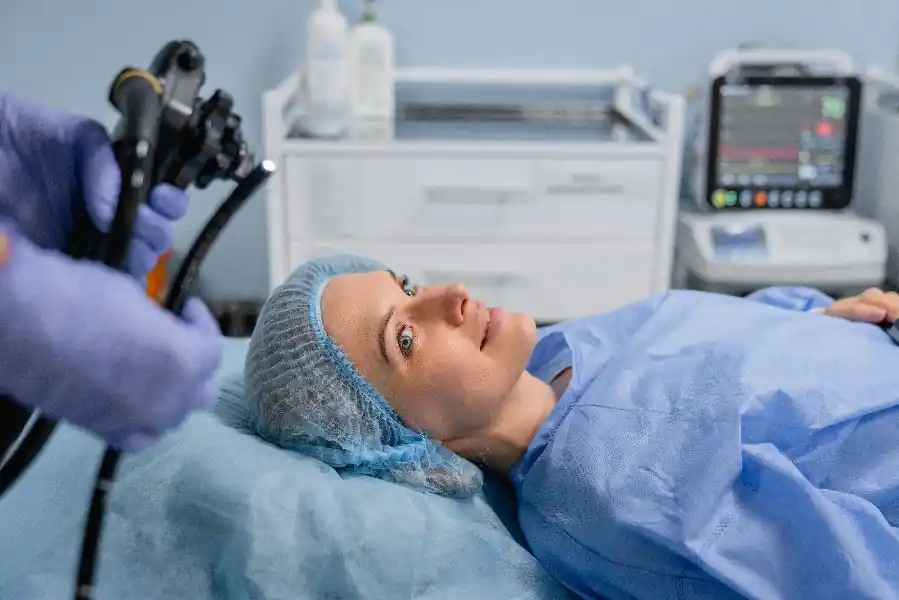
Our diagnostics and risk evaluation services cover a range of screenings, tests, and evaluations designed to catch concerns early, assess your individual risk, and guide your care in the right direction. Here's what that includes.
When a patient is referred to Whole Health Oncology with a concern, abnormal result, or elevated risk, one of the first things we do is determine exactly what kind of testing will give us the clearest picture. These are chosen specifically based on what your history and symptoms tell us, so that every step of the evaluation is purposeful and targeted.
If a screening test returns a result that warrants a closer look, your provider will refer you to a specialist for a colposcopy, a detailed examination of the cervix, vulva, or vagina using a special microscope on wheels. In some cases, a biopsy of the cervix, vulva, vagina, or endometrium may also be needed, where a small sample of tissue is taken and sent to a laboratory for analysis. These procedures are performed through a referral, and are often what it takes to get a clear, confident answer about what's going on.
Genetic testing is offered in-house for patients with a personal or family history of gynecologic, breast, or colorectal cancers, or for those who may carry inherited gene mutations such as BRCA1 or BRCA2. Your provider will start by reviewing your full personal and family health history to determine whether genetic testing makes sense for you. If it does, testing typically involves a simple saliva or blood sample. If genetic counseling is recommended, your provider will refer you to a genetic counselor.
From there, a hereditary cancer risk assessment helps put your results in context alongside your broader history. If your assessment reveals an elevated risk, your provider will work with you to put a proactive monitoring and surveillance plan in place, so you're never left wondering what to do with that information.
Most patients who come to Whole Health Oncology have been referred by another provider, whether that's a gynecologist, primary care physician, or specialist. If you've received an abnormal result or have a family history that concerns you, your referring provider can send your records directly to our team ahead of your visit. We also welcome self-referrals. If you're unsure whether a referral is needed, feel free to give us a call, and we'll help you figure out the right next step.
Several factors can raise your risk, including a personal or family history of gynecologic, breast, or colorectal cancers, certain genetic mutations like BRCA1 or BRCA2, a history of HPV infection, and age. A risk assessment at Whole Health Oncology can help you understand your individual risk profile and put a monitoring plan in place that's tailored to you.
Your provider will sit down with you and walk through what the results mean in plain, honest terms. If further testing or treatment is needed, you'll leave with a clear understanding of what the next step is and why. For patients whose results point toward a cancer diagnosis, we'll move into a full new patient consultation to begin building a personalized care plan together.
Scheduling with Whole Health Oncology is easy. Either give us a call at (904) 373-1177, fax us at (904) 925-3351, or request an appointment online, and one of our care coordinators will reach out to walk you through the next steps. We’re located in St. Augustine, Florida, and see patients from across Northeast Florida, including Palm Coast and the greater Jacksonville area. We look forward to welcoming you!